Home / Blog
The Nimble Communicator
Good Deeds News Coverage
Can Still Reinforce a Brand
February 28, 2012 | No Comments
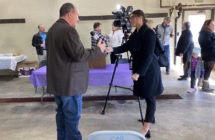
Good deeds aren’t necessariliy newsworthy on their own. But with the right treatment, they can draw significant media interest — and reinforce a brand.
Comments on Ryan Braun’s PR Home Run
February 25, 2012 | No Comments
The hallmarks of Braun’s approach apply far beyond sports. Here’s our take on what made his PR homer so towering.
Transparency is Good for Business
February 02, 2012 | 2 Comments
In the newsrooms of yesteryear, reporters bemoaned the formidable walls of privacy that protected the affairs of private companies. Those walls are crumbling.
There’s Only One Home, and
I’m Glad to Work Here
January 03, 2012 | 2 Comments
Jim Houck is glad to be back home in the Youngstown area, he says in his first blog post since joining Pecchia Communications.
Slider Helps YOA Website Pack it In
July 18, 2011 | No Comments
How do you structure a website if your organization offers far too much in terms of primary services to fit neatly on a home page?
Change Management Communications:
6 Imperatives for Success
March 15, 2011 | No Comments
These six guidelines will make it easier to maximize support for even the most dramatic changes.
Brochures Haul New Branding for Aim Companies
March 15, 2011 | No Comments
New brochures from Aim NationaLease and Aim Integrated Logistics point up the advantages they offer to companies that want to outsource their transportation activities.
Communication Opportunities Emerge
With Specifics on Healthcare Reform
June 30, 2010 | No Comments
While this is a period of frustrating uncertainty for anyone involved with communicating about healthcare reform, it’s also a time of tremendous opportunity.
Promoters Cloak Bike Race in Green,
Seek More Volunteers for July Event
June 28, 2010 | No Comments
Promoters of the Tour of the Valley are unabashedly leveraging messages about cleaner air and a greener planet as they seek participants and volunteers.
BP’s PR Effort Needs Focus, Not Stunts
June 15, 2010 | 7 Comments
BP would find itself in deeper goo if it would heed any of the PR recommendations reported recently by the Associated Press.
Under Circumstances, BP PR Not So Bad
May 18, 2010 | 10 Comments
Finally, BP released video last week of the deep-sea leak. Withholding the footage was one of the company's PR mistakes.
We”re watching one of the most overwhelming public relations challenges in the modern history of American business unfold around the BP oil spill in Louisiana.
And under the circumstances, the team there isn’t doing half bad.
Yes, the oil is still gushing into the Gulf of Mexico at the rate of over 5,000 barrels per day. And yes, the financial and environmental damage are already devastating and will grow.
But those results were guaranteed April 20, when the disaster first made news. Even the best public relations strategy can’t change the facts.
Since then, BP has kept its executives visible, shared information with its broad constituencies and even ponied up cash to support tourist bureaus in the region.
Daily opportunities to communicate
As is always the case in a situation like this, BP has been given a daily forum in the major media. Though the company has made some mistakes, its spokespersons have used the spotlight effectively to convey the company’s commitment to clean up the mess and to demonstrate that commitment with action.
BP has portrayed the spill as the enemy, and itself as the protagonist.
Contrast its behavior with companies in previous situations, large and small, that relayed limited information and demonstrated no action. The silent approach is not safe, but creates a dangerous vacuum that sucks into the spotlight every opponent, from the credible to the crackpot.
BP is filling the vaccuum, not only by taking advantage of the media limelight but more importantly by updating regulators, members of Congress and local communities.
“It seems like almost on a daily basis somebody has sort of checked in or called or come by the office providing information, being available to answer questions,” Senator Thad Cochran, a Mississippi Republican, told Business Week (read the full article).
Signs of optimism
Last week, TheStreet.com polled its readers on whether BP would halt the catastrophic leak in time to avert a disaster as massive as the Exxon Valdez leak in 1989. Some 58 percent of respondents thought BP would.
The investing public seems more optimistic. Although BP’s stock price has declined almost daily since last month’s explosion, and closed Monday at $46.57, it’s still far above the $35 it hit early last year. That suggests the spill is less a drag on BP’s value than the 2009 economic catastrophe from which stocks have generally recovered.
The story is not over, and there’s only so much PR can do amid a disaster like this.
At least BP’s doing that.
News Value Blessed Men’s Rally PR
May 17, 2010 | 1 Comment
When it comes to pursuing the publicity that is so important for their success, many nonprofits, especially faith-based groups, fall into sin.
They tend to advance messages about their causes and their leaders ahead of information that media professionals consider newsworthy.
Fortunately, the organizers of the recent Men’s Rally in the Valley in downtown Youngstown didn’t fall into that temptation. Although their cause – building a Promise Keepers-style event that would challenge Christian men to live up to their faith – was noble enough, their approach relied on strategies and content that scored with the secular media.
As a result, the first-time event drew a huge volume of print, broadcast and online publicity en route to what organizers and the Covelli Centre considered an extraordinary success. Some 3,500 men from diverse Christian backgrounds packed the downtown arena on Saturday, May 8, for a day of challenge and commitment.
(Pecchia Communications led the event’s nine-month campaign, pro-bono, leveraging its own handiwork and that of five other northeast Ohio companies that also donated all their time: American Sign Co., Bob Popa Entertainment, Gregoryfilms, On the Brink Creative and Ten29 Productions).
The team effort involved capitalizing on real news hooks:
Youngstown Mayor Jay Williams. An outspoken Christian, the mayor agreed early to give the opening remarks for the May 8 event. In addition, he spoke in a compelling video (produced for free by Ten29) about what the Mahoning Valley would be like if Christian men commit to “walk the walk” of their faith. His involvement was a media magnet, and the video played in dozens of Valley churches and on YouTube.
Rally speaker Dave Dravecky. The Boardman native’s name and inspiring story are huge among sports fans and the Christian community. Dravecky’s picture in articles and on the Rally website, posters and fliers gave the event more credibility than a first-time effort typically deserves. His live interview on WYFM 95.5 The Fish in Cleveland was replayed twice.
Covelli Centre. In Youngstown, the rebounding downtown and its flagship entertainment venue are news. Far before the Rally took place, we invited media to interview event leaders in front of the arena. We secured the Covelli’s community room for a press conference four weeks ahead of the event.
Diversity. The large and diverse volunteer team that planned the Rally reflected extraordinary unity. That resonated with the media, and our handout picture of Bing Newton and Rev. David Moncrief in front of the Covelli Centre was published prominently in several papers.
The marketing effort went far beyond publicity. The team also developed a website, television commercials, radio spots, billboards, yard signs, two videos, an email newsletter and much more. It’s amazing what can be accomplished when not one, not two, but six communications companies donate heavy volumes of time.
Media publicity, though, is achieved not with time but with news value. Non-profits that can objectively apply an editor’s mindset to their activities and create that value can expect answers to their prayers.
Memo Banning ‘Newsspeak’ Signals
Better Direction for Traditional Media
March 22, 2010 | 6 Comments
A Chicago radio station’s controversial memo banning broadcast newsspeak reflects the scramble now under way in the traditional media world as bloggers, Facebook, Twitter and other new information sources emerge.
The list of 119 words and phrases now banned at WGN 720-AM range from the sensational, like “lone gunman,” “killing spree” and “clash with police,” to basic poor English, like “5 a.m. in the morning” and “at this point in time” (see the whole list on the right).
Getting these words out of newscasts will improve the delivery of news by making it more about information and less about theatrics. More importantly, it will remove the impression that the broadcast news industry thinks it’s so special that it needs to preserve its own special, stilted, silly language.
It’s a new world now
Although it’s become borderline-cliche to observe this, the traditional media have a new role now. They’re not the only sources of information anymore.
Sometimes they’re slower and less complete than blogs that cover the same events and issues. Sometimes their stories are not as interesting or relevant as content posted on Facebook.
This doesn’t mean traditional media are toast. We still rely on them for news that’s completely accurate, fair and objective, which far transcends our expectations of Twitter or YouTube.
That’s why getting rid of newsspeak is a good thing.
Phrases like “senseless murder” and “fled on foot” make intelligent listeners roll their eyes. As a language constructed to convey superiority, almost like the guy who prays with “thee” and “thou,” it’s a drag on objectivity. (See National Public Radio’s amusing mock newsread that uses all of the silly phrases.)
Resisting change
The Chicago list, developed by Tribune Co. CEO Randy Michaels and issued by WGN news director Charlie Meyerson, was big news in the media world last week, but for the wrong reasons.
Because the memo also asked WGN employees to snitch on anyone who disobeyed the order, it got panned as micromanagement.
Whenever there’s change, there’s resistance, and the entrenched will grab anything they can to defend their comfort zones.
But the crumbling facade that is broadcast newsspeak isn’t worth defending. Time and energy would be better spent on gathering more and better news and delivering it in real words.
- “Flee” meaning “run away”
- “Good” or “bad” news
- “Laud” meaning “praise”
- “Seek” meaning “look for”
- “Some” meaning “about”
- “Two to one margin” . . . “Two to one” is a ratio, not a margin. A margin is measured in points. It’s not a ratio.
- “Yesterday” in a lead sentence
- “Youth” meaning “child”
- 5 a.m. in the morning
- After the break
- After these commercial messages
- Aftermath
- All of you
- Allegations
- Alleged
- Area residents
- As expected
- At risk
- At this point in time
- Authorities
- Auto accident
- Bare naked
- Behind bars
- Behind closed doors
- Behind the podium (you mean lecturn) [sic]
- Best kept secret
- Campaign trail
- Clash with police
- Close proximity
- Complete surprise
- Completely destroyed, completely abolished, completely finished or any other completely redundant use
- Death toll
- Definitely possible
- Diva
- Down in (location)
- Down there
- Dubbaya when you mean double you
- Everybody (when referring to the audience)
- Eye Rack or Eye Ran
- False pretenses
- Famed
- Fatal death
- Fled on foot
- Folks
- Giving 110%
- Going forward
- Gunman, especially lone gunman
- Guys
- Hunnert when you mean hundred
- Icon
- In a surprise move
- In harm’s way
- In other news
- In the wake of (unless it’s a boating story)
- Incarcerated
- Informed sources say . . .
- Killing spree
- Legendary
- Lend a helping hand
- Literally
- Lucky to be alive
- Manhunt
- Marred
- Medical hospital
- Mother of all (anything)
- Motorist
- Mute point. (It’s moot point, but don’t say that either)
- Near miss
- No brainer
- Officials
- Our top story tonight
- Out in (location)
- Out there
- Over in
- Pedestrian
- Perfect storm
- Perished
- Perpetrator
- Plagued
- Really
- Reeling
- Reportedly
- Seek
- Senseless murder
- Shots rang out
- Shower activity
- Sketchy details
- Some (meaning about)
- Some of you
- Sources say . . .
- Speaking out
- Stay tuned
- The fact of the matter
- Those of you
- Thus
- Time for a break
- To be fair
- Torrential rain
- Touch base
- Under fire
- Under siege
- Underwent surgery
- Undisclosed
- Undocumented alien
- Unrest
- Untimely death
- Up in (location)
- Up there
- Utilize (you mean use)
- Vehicle
- We’ll be right back
- Welcome back
- Welcome back everybody
- We’ll be back
- Went terribly wrong
- We’re back
- White stuff
- World class
- You folks
Indy Colts Goof Again, This Time on Facebook
March 21, 2010 | No Comments
A month after bumbling their way to defeat against the underdog New Orleans Saints in the Super Bowl, the AFC Champion Colts took some shots from their online fans Saturday after goofing up big-time on Facebook.
This morning, the Colts began flooding the newsfeeds of their Facebook fans with posts from February about pre-Super Bowl activity. More than 50 of the outdated posts rolled in by late this afternoon.
The blitz ended this evening, marked by two messages from the Colts. One included an apology and a vague description of the problem, and another stated (accurately) that the goof was fixed.
Thus spake the fans
Reactions ranged from amused to ticked off.
“Please quit posting stuff every five minutes and taking up my whole homepage feed!!!!!,” hollered Kevin Brock of Monrovia, Ind.
Joked Michael Wallace of Cincinnati: “Appparently, the Colts have just announced that with the 1st pick of the 1998 NFL Draft they have selected Peyton Manning, QB from U. of Tennesssee. So much for the information age.”
Reflecting a stronger team spirit, Heather Harlan of Kingsport, Tenn., cheered, “i still love the colts!!!!!!!!”
What’s in an API?
In this first message from the Colts, the team appears to blame Facebook.
An API (application programming interface) is basically a way for a program to accomplish some task, usually through an alphanumeric API key. The reference to “a change” in the Facebook API that activates the feed of Colts news to its fans is hard to understand.
Here’s the Colts’ second message:
Now the word is that the API got stuck last month, then made up all of its lost ground today. The old posts really were done at this point.
Taking bull rush to a whole new level
As a long-time Colts fan, I don’t agree with all the criticism levied at the Facebook page caretakers.
Those guys should get a shot to replace Dwight Freeney and Robert Mathis on the defensive line. If we had any kind of rush like that in Super Bowl XLIV, we’d have the Lombardi Trophy on our Facebook profile.
Disdain for Plain English Can Doom
Promising Change Management Plans
March 14, 2010 | 4 Comments
Not long ago, a client sent me a piece of communication, written by a colleague, and asked me if I could rework it. Believe it or not, this is how it began [specifics concealed]:
“[Company] in partnership with [Big Consulting Firm] is conducting a 90 Day [Department] study championed by [Executive’s Name], [Executive’s Lengthy Title], that supports understanding our business and Go-To Market strategies while leveraging existing functional strategies in Manufacturing, Logistics, Procurement, IT, as well as broader global blueprints from Europe and Latin America to define a transformational roadmap for our future.”
Fortunately, we worked this clicheosaurus into something meaningful.
But unfortunately, some communication like this is actually distributed. And tragically, such communication is often used to support major organizational changes, like combining businesses, shifting information systems, imposing new processes, shuffling staff or consolidating locations.
Why Communication is Important
Poor communication at the outset of a challenging organizational change can ruin its chances for success. Because employees, customers, suppliers and distributors are people, they:
- Need to understand a change before they can even begin to support it, let alone advocate it.
- May look unfavorably on something that is so shrouded in unclear language that there seems to be a conscious effort to hide what’s happening.
According to a 2007 study by the Computer Technology Industry Association, the top reason major information technology projects fail is poor communication.
Common Sense Goes a Long Way
Because of financial constraints, some critical corporate projects won’t get the benefit of professional communications resources. But common sense can go a long way toward harnessing the power of plain English.
Here are a couple imperatives for communication in the change management arena:
- Focus on the audience. Good communicators consider what the reader needs to receive in order to understand and embrace something. Look at your writing through a reader’s eye.
- Be honest. Even issues that are difficult are based on some rationale. Learn that rationale and use it as support to communicate honestly. That will advance your project more effectively than hedging and vagueness, which ruin credibility.
For more about the role of good communication in making good things happen, watch this blog. If you have a point of view on this rich subject, share it in the comment box.
With New Press, Vindy Looks Great;
Now It’s Time to Lose the Scowl
March 08, 2010 | 7 Comments
Ernie Brown and Ted Suffolk, right, are pleasant fellows and publisher Betty Jagnow manages a smile here. GM Mark Brown … not so much. (Click for a full view of this photo from last Sunday's paper.)
The Vindicator‘s new design enjoyed a stunning debut this past week, making good on all the fanfare.
Leveraging the capabilities of a newly refurbished press, the Youngstown-based daily has carried heavy doses of color photos and graphics with far more clarity than Vindy readers have ever seen. Even the daily comics are in color.
The paper looks great. The new, slightly larger body typeface is much easier to digest and the sharp headlines beckon from the orange boxes without hollering like a tabloid.
Even the narrower size, which portends a smaller news hole, has an appeal to it. Outside a few minor goofs that are unavoidable in such launches, the Goss International press that once printed the Los Angeles Times has ”the People’s Paper” looking as crisp as the USA Today or any other U.S. daily.
Along with Vindy.com and the new Neighbors editions, the new press and new look give the locally owned Vindicator Printing Company a huge new opportunity to regain advertisers, hold onto readers and haul in high-end commercial work.
Hopefully, in addition to the meticulous planning required to launch the new press, the paper will work hard to retool its public image as well. That can use some investment.
Scuffling and scowling
On the front of a special section last Sunday, in a huge color photo showcasing the new equipment behind the paper’s management team, nobody could miss the snarling scowls. Unfortunately, that’s the puss the Vindicator wears as an organization at times.
The paper suffered through an eight-month strike in 2004-05, the latest byproduct of many years of strain between the management and employees. Reporters picketed daily downtown. Some started their own newspaper to compete with their employer. Vindy managers, meanwhile, camped inside for days at a time to keep the paper running. It’s not hard to understand why the work environment remains challenging.
While the paper has long claimed financial hardship (a credible story in this market of declining population), employees and Newspaper Guild unionists have scowled over management’s chronic inability to improve the financial look.
The Vindy is no Fast Company, to be sure. Though its capital launched the innovative cBoss Internet years before many Youngstowners used email, the paper itself took forever to get online. Various heroes recruited to reignite ad sales have come and gone. Even the press installation has been a miniboondoggle fraught with delays and legal action.
Good news
Fortunately, the paper has plenty of capacity to redesign its image. Its new editor, Todd Franko, is a newsman and no scowlmeister. Since joining the paper in 2007, he has brought personality to the paper with his affable Sunday column.
Since the impressive new color comes with a premium, some low-budget advertisers still prefer black and white. (This ad ran in Friday's business section.)
The online edition — still free — has increased the following of popular columnists like Bert deSouza and Ernie Brown, who also play well with the public and know Youngstown through and through. Several writers, editors, photographers and designers have won statewide Associated Press awards lately. And the online polls and comment threads on vindy.com are engaging the online audience, drawing thought leaders, business people and young new readers along with the gadflies.
Keeping with tradition set by its founders, the Vindicator remains heavily involved in community affairs. In addition to its storied Vindicator Spelling Bee, the paper invests quietly in many do-good initiatives, ranging from the Community Improvement Corp. that sparks business activity downtown to the Power of the Pen student writing competition. The much-ballyhooed Youngstown Business Incubator owes its existence to a benevolent building donation from Vindicator Printing.
A happy face
In the past year, Franko has taken on more speaking engagements, which have given the paper more of a happy face. That’s a front-page public relations strategy for the Vindy, which has a big room full of professional storytellers.
Though quiet philanthropy was fine in the day when competition was limited, the paper needs to toot its horn more emphatically now that it’s competing with so many others in town and online for the hearts, minds and budgets of readers and advertisers. Its toughest assignment is to delete the union-management strife before the next round of Guild negotiations.
As reflected last week in the widespread cheers for the paper’s new look, many in Youngstown are pulling for the Vindy. One of America’s few locally owned dailies, it employs more than 250 people, most of them downtown, and has over 300 independent carriers. It’s as much a bedrock Youngstown institution as Youngstown State, the Canfield Fair or the Symphony.
If it’s to avoid being the next Sheet & Tube, Dollar Bank or Butler Wick, it will need stronger bonds with its employees and other neighbors. That’s why a corporate smile has to run daily, above the fold.
Ex-TV Reporter Clarifies Facts
As Cafaro Company Spokesman
March 02, 2010 | 5 Comments
In this 2002 file footage, used last week on Channel 21, Bell the Channel 27 reporter chases J.J. Cafaro after Cafaro pleaded guilty to bribery.
Joe Bell certainly had tough days in his old job as a television reporter.
Now, as spokesperson for the Cafaro Company, he’s learning difficulty at a whole new level.
Bell, 51, chased news for WKBN Channel 27 in Youngstown from 1992 to 2007 and had an edge to him. Though a short fellow, his deep, clear voice was good for a zinger at many a news conference. He was a newsman in a trade often plied by would-be movie stars.
Tough week
When he joined Cafaro as director of corporate communications in early 2008, he could not have imagined a week like the last one. Last Monday, J.J. Cafaro pleaded guilty to making an illegal payment to an election campaign of his daughter, Capri, now an Ohio senator. The next day, Flora Cafaro was revealed as the provider of a loan accepted illegally by a Youngstown judge.
These stories surfaced less than two months after Bell’s team announced the retirement of J.J., 58, and his older brother, Anthony, 63, from their leadership positions at the real estate concern in what was described as a transition long in the making.
Last week’s news was tragic in that the Cafaro Company, one of America’s largest shopping center developers and a highly philanthropic and still-Youngstown-based concern, established in the 1940s by J.J.’s father and uncle, is being mentioned alongside serious criminal offenses. So is Senator Cafaro, a respected young stateswoman.
Setting things straight
To minimize the damage, Bell, the family’s Cleveland lawyers and Capri’s personal public relations firm have cut the ribbon on an anchor store full of clarifications, corrections, asterisks, addenda and other ”corporate communications.” To wit:
- J.J. admits illegally advancing $10,000 to Capri’s unsuccessful campaign for Congress in 2004. But a formal statement emphasizes that this was a personal action that had nothing to do with his official capacity as executive vice president of the company.
- A person working on Capri’s campaign acknowledges receiving her dad’s $12,000, far above the $2,000 contribution limit. But that does not mean Capri condoned it or was even aware of it. She tells The Vindicator that her father ”has made a habit over the years of doing things and not necessarily telling me about them.”
- Flora Cafaro is identified as the provider of an $18,000 loan to a friend, Maureen Cronin, the ex-judge now headed to prison. But another Cafaro Company statement emphasizes that Flora has no day-to-day involvement with the real estate company. Although The Vindicator digs up a public record in which she lists herself as a Cafaro Company official, Bell clarifies that this information is not accurate.
Time for a change
These are the kinds of clarifications the old Joe Bell may have ripped apart … especially if they were being conveyed by a Congressman, commissioner or contractor charged on the public record, making them safe targets for such rippage.
Today, though, Bell is a contributing author and provider of such clarificata.
“We are only stating what the actual relationships are,” he stated in a phone interview.
“On the whole, our local writers have been fair and balanced,” Bell said of last week’s front page coverage. “There have been some inaccuracies, but a lot of the stories don’t have an awful lot to do with the work I do.”
He says he has no second thoughts about his leap from Channel 27 to Cafaro.
“I feel the same way as when I first left the news business,” Bell said. “It was time for a change.”
Is Forbes Becoming a Town Crier?
February 25, 2010 | 6 Comments
Forbes.com uses this Associated Press file photo of disgraced Congressman Jim Traficant to illustrate its comments about Youngstown.
Once known solely for excellent financial writing, Forbes appears to be heading the way of the Town Crier.
The magazine took another step in that direction last week when it published its latest Most Miserable Cities list, with Cleveland (No.1), Youngstown (18) and three other Ohio cities in the top 20.
The Town Criers are a chain of Ohio weekly newspapers, and about 10 years ago they birthed an intriguing idea. They decided to award the “best” businesses in their communities, in a range of categories.
The Town Criers published forms, about eight inches square and bordered by a dotted line, on their back pages for several weeks and encouraged readers to fill out the forms and mail them in for their favorite businesses. The businesses for which the most forms were received were declared the Town Crier Best.
Initially, being the best caught on. Merchants implored shoppers to mail in the Town Crier forms. Those who won proudly displayed their Town Crier Best plaques. Some put “Town Crier Best” in their ads or on banners.
Over time, though, being the best lost its allure. As it became common knowledge that some businesses bought dozens of Town Criers and had employees cut out forms, fill them out and send them in, credibility suffered. Readers and businesses lost interest.
In the last few years of that initiative, the Town Crier looked silly. Some of the restaurants they declared the best were ones I had never heard of. Sometimes really ugly home-made ads by merchants of lousy repute included the words, “Town Crier Best.”
Forbes doesn’t look quite that silly, but it’s getting there. The magazine now publishes more than 50 lists, many of them with questionable value.
In the early 1990s, when I left a news job to work at a public relations firm, I badly wanted to land our larger clients in Forbes. So I studied the book so closely I became obsessed with it. I got to know Forbes writers by their work and made inferences about the information we needed to get a client through that gate.
At a media relations conference in New York, a Forbes editor talked about how difficult that process was. The room was packed. I was fortunate enough during that trip to schedule a meeting with a Forbes editor at his office. I’ll never forget the high doors, soft carpets and stern faces. This was a news office, but it felt like a corporate law firm.
Despite our firm’s best efforts, we couldn’t get our clients in Forbes with any regularity or prominence. They were pleased to land small mentions now and then.
Today, some of the articles I see in Forbes look like rewritten press releases. There are some great reads, but also a lot of very, very light fare.
And tons of lists. Forbes has leveraged its popular Richest Americans list into lists of the wealthiest people in Australia, Japan, China and other nations, and that’s smart. The magazine has also expanded to lists of colleges and cities.
But line extensions have natural limits, and Forbes‘ list strategy has surpassed those. Its roster of 50-plus lists now includes the top-earning models, top-earning dead celebrities and best cities for singles. This ain’t the book it used to be.
Because of its knock on Youngstown and Cleveland, I was thinking of boycotting this latest edition of Forbes. But I’ve decided to buy one. I want to see if there’s a form with a dotted line border on the back.
Comments welcome below. Here are a couple other takes on Forbes’ latest list:
- Forbes Magazine is Worse Than a Dirty Lover; It’s Fickle (Plain Dealer)
- Get a Clue, Forbes (Hit the Trails blog)
Café Capitalizes on Interest
Sparked by Attack on Senator
February 16, 2010 | 1 Comment
The Lemon Grove's Jacob Harver has played the media well.
A downtown Youngstown café where an Ohio senator was assaulted last week is turning the proverbial lemon into lemonade.
Jacob Harver, owner of the fortunately named Lemon Grove, has used the attention sparked by the February 6 incident as a forum to deliver good news about his establishment, the downtown and even the guy accused of suckering Senator Robert Hagan.
The soft-spoken Harver is no public relations luminary. But by reacting quickly, being accessible and telling the truth on his own terms when the bad news hit, he squeezed out a pitcher full of favorable publicity, goodwill and patronage.
As The Vindicator and others have reported, a 30-year-old dancer was charged with punching Hagan, 60, after the two exchanged words.
Seizing an opportunity
Many in a position like Harver’s would have ignored calls from the media and issued a meaningless “statement.”
But Harver welcomed interviews. He told reporters that the Lemon Grove isn’t a rowdy bar, but a café that serves alcohol and coffee to patrons who listen to its music, admire its art, play board games, crochet, work on their laptops and whatever.
He called the incident out of character for the café and the downtown — and the dancer, whom he knows.
Nice results
Harver’s comments have drawn excellent exposure on all three Youngstown television stations, in The Vindicator and on several local blogs. A few days after the incident, Harver wrote his own recap and distributed it to reporters, customers and friends (read the detailed letter on the Youngstown Renaissance blog).
Snippets from his report were quoted in several of the follow-up stories, including Vindicator Editor Todd Franko’s column on Sunday. In terms of business, last weekend was one of the best since the Lemon Grove opened last summer, Harver said.
“The Vindicator did a good job of covering this from the start,” he said, “but I didn’t think the whole story was told in full, so I compiled my own report.
“I don’t believe in the whole ‘No comment’ thing. I think people should talk about their points of view.”
That’s a premise that can bear fruit in a lot of situations.
J.D. Williams, Pilot Running for State Rep
In Ohio’s 65th, Looks Like the Real Deal
January 21, 2010 | 2 Comments
Jim Graham, left, introduces J.D. Williams.
Although I usually avoid politics of any sort, an old friend who declared his candidacy for state representative recently has sparked my interest in the May primary election. Other heads are likely to turn as well.
That’s because J.D. Williams of Liberty is the kind of candidate we don’t see too often in Ohio. J.D. is a private sector success and, at age 48, is a political newcomer. That is, he hasn’t had to earn his living by dealing in political favors. Nor does the United Airlines pilot and Air Force Reserve officer need a state government job now. So when he talks about what his leadership skills can contribute to Ohio’s 65th District, he’s believable.
And although that alone is refreshing, it’s not all that’s exciting about his candidacy. Despite being a rookie, Williams has some firepower in his corner. Union leader Jim Graham and political consultant Vic Rubenstein were front and center at the candidate’s recent kickoff event at the Infante Recreation Center in Niles.
Big Hitters
Graham is the long-time president of United Auto Workers Local 1112 at General Motors in Lordstown, the most visible leader in the region’s union movement and also the most credible. Rubenstein, over the past 30+ years, has turned many losers into winning candidates and many winners into landslide candidates. Here they are backing this neophyte, along with Jack O’Connell, the retired building trades union chief.
“Because there hasn’t been anybody like J.D. Williams in a long time,” intoned Graham, the candidate’s campaign manager, who opened the kickoff event.
Added Rubenstein, in a phone interview, “He is the real thing. Not every candidate who comes to you is someone you really want to represent. Often, this is a job. But sometimes you get really, really excited about the person, and J.D.’s one of those guys.”
Leadership Experience
After all these years, Williams says he wants to get involved in state government now for the right reasons – primarily to help stimulate the economy, so that more of our neighbors can find good jobs and keep their families in northeast Ohio. “We don’t need higher taxes … we need more taxpayers,” he says.
We’ve all heard that before. But we usually hear it from people who have little or no legitimate leadership or business experience.
Williams does. He’s a veteran commercial pilot with United Airlines who flies a 767 around the world. He’s an officer with the Air Line Pilots Association. And he’s a 29-year veteran in the Reserves, where he has flown C-130 transport planes throughout the Middle East and taught hundreds of young men how to fly them in dangerous conditions. He’s been a squadron leader, planning and executing dozens of supply missions at home and abroad.
A tall guy, J.D. has a presence and a powerful voice to go with his good looks and friendly demeanor. The strategy, says Rubenstein, is to get as many people as possible to encounter the candidate’s uniqueness.
“We definitely want to reach out to as many lives as we can,” he said. “That includes precinct committee people who are at the heart of the Democratic system, and the good influencers and good collaborators. He’s been doing that religiously.”
Opponents
Williams has two opponents. Neither has significant (if any) private sector leadership experience.
- Sean O’Brien is an assistant Trumbull County prosecutor (no relation to Warren Mayor Michael O’Brien).
- Edward Stredney is a Niles councilman and, according to his Facebook page, has worked at Sears Holdings since May 2008.
Adjustments at GM Plant Lend
Insight For Surviving Downturn
January 07, 2010 | No Comments
GM's Lordstown car plant (New York Times photo).
Tuesday’s New York Times story about labor peace at a once-militant Ohio factory points up one of the silver linings of this recession: the promise of better days for survivors.
The story (read it here) covers the compromises union workers have made in the past two years at a General Motors car plant in Lordstown, Ohio. Once a morass of labor strife and poor workmanship, the plant west of Youngstown is now among the few left standing after GM’s harsh two-year round of closings and layoffs. Lordstown’s 3,000 employees are now preparing to build the Chevrolet Cruze, a linchpin in GM’s strategy for the next decade.
Survival is always good. But when this the worst downturn since the Depression finally ends, any organization left standing will by necessity have become leaner and stronger, likely on the strength of drastic adjustments it had not been forced to consider when times were good. It will have fewer competitors.
This will be as true of small businesses and non-profits as it will for General Motors, Boeing, Citi and other behemoths that appear to be turning the corner.
But if the experience recounted by the Times in Ohio is any guide, the road to survival will not have been easy. Employees at the Lordstown plant took sharp pay cuts. They voted to relax work rules that stood for decades – the ones that survived the last round of harsh compromises in the early 1980s. They changed their attitudes.
“When General Motors had such a big percentage of the market, our fears weren’t there,” unionist Ben Strickland tells the Times. “There wasn’t a trump card that we didn’t pull. Now you’ve got to be careful about pulling those trump cards out because it could be your last. We want G.M. to be successful. We want the U.A.W. to be successful. Making that happen on both sides, that creates security.”
The economic and attitude adjustments that have made Lordstown a survivor provide good insight for any organization pursuing that same promise.
Quick Follow-Up: Tiger Can’t Have It Both Ways
December 04, 2009 | No Comments
Tiger's PR swing is off.
Tiger Woods has a point when he says our society’s obsession with celebrities’ private lives has gotten out of hand. It’s this obscene voyeurism that creates the market the tabloid press serves by hounding heroes when “news” befalls them.
But right next to Tiger’s point is the fact that our society has other obsessions that work to his benefit. Is it not out of hand to pay $500 for a Nike driver with Tiger’s favorite shaft? Or $900 for a set of the Nike irons he endorses?
Out-of-hand prices create the return on Nike’s endorsement contract with the Tiger and help make him the world’s highest-earning athlete.
Wrinkles in the social fabric
When it comes to the social fabric of our society, Tiger can’t have it both ways.
He can’t bemoan the wrinkle that puts his personal sins on Page One while capitalizing on the one that enables him to leverage his athletic skills into millions of dollars in income (now over a billion, actually).
Like other championship athletes, movie stars and business leaders who ride public sentiment to fame and fortune, Tiger needs to navigate same when it leads him (as a result of his own actions) to less-comfy places.
Here are some other blog posts about the PR aspects of Tiger’s bad drive:
- Playing a Bad Lie: How Tiger Botched a PR Opportunity (Ella Bee Social Media)
- Tiger Woods Transgression: Can He Recover His Pitchman Status? (New Economy Blog)
- Tiger Woods is Right (Matt Eventoff)
- Tiger’s Imperfect World (Yahoo Sports)
- How Tiger Woods Could Rehabilitate His Image Now (Devil Ball Golf)
Tiger Woods Reinforces Old PR Lesson:
Staying Silent Only Makes Things Worse
November 28, 2009 | No Comments
Tiger Woods is the best golfer in the world and likely the best to ever play the game.
But when it comes to public relations, mark him down for a snowman.
It took Tiger’s camp 13 hours to release a public statement about the bizarre car accident near his home this weekend. And because the statement left so many questions unanswered, Tiger has now become the subject of widespread speculation about his personal life.
All of this reinforces an old lesson in public relations: When breaking news raises legitimate questions, staying quiet will make things worse instead of better.
He can’t opt out
Like other championship athletes, movie stars and business leaders, Tiger cannot simply “opt out” of news coverage when something major occurs in his life. He is a public figure. When he wrecks his car at 2:25 a.m., that is news and media professionals will ask questions.
This is not a judgment on whether Tiger deserves privacy. It’s just a fact of American life that when you’re a public figure, the media will report on and scrutinize your behavior when an aspect of it makes news.
Certainly Tiger’s camp realizes this. That is why it’s so astonishing that their media statement was so slow to materialize and so lacking in substance.
What should he have done?
Since Tiger cannot opt out of media coverage, he has two choices when things like this occur. First, lay up and let an information vaccuum prevail so that rumor mongers and others can fill it. Or, swing away for a measure of control by becoming the first and most complete source of information.
Tiger’s camp has decided to play short, and to his detriment. His slow response and lack of substance have not only become part of the story, but have left the fairway wide open for rampant speculation.
It could be that Tiger was advised to take a more proactive path but didn’t listen to the advice. Tiger’s injuries could also have delayed a more meaningful response . . . but not by 13 hours.
It could be that some of the details behind the accident are embarrassing to Tiger (though we’re not sure of that yet). If so, those details are better coming from Tiger himself in the early going than being “revealed” down the road by somebody else. The high road is a more efficient path to acceptance and forgiveness.
Lessons learned
Unfortunately, being in the media spotlight and faced with difficult questions isn’t a fate that befalls only superstar athletes. It can also happen to well-meaning small business owners, civil servants and non-profit leaders that don’t have PR teams on retainer.
There are lessons to be learned from Tiger Woods’ roadside triple bogey. Among them are these:
- Don’t let a vaccuum develop. Instead, become the first and most complete source of information. That won’t insulate you from negative coverage, but it will give you the credibility and access you need to best protect your reputation.
- Tell the truth, even if it’s not flattering. It’s best that embarrassing information comes from you, early, and accompanied by related information that provides a proper perspective. Humility and honesty inspire forgiveness and acceptance. Information that is “discovered” from other sources will likely be played more negatively and will likely lack context.
- Be consistent and responsive. Make sure the story is told the same way to everyone. Inconsistency ruins credibility.
- Use these situations as opportunities. Media relationships are more valuable than media transactions. By being honest and credible under fire, you will improve your chances at being treated well by media professionals down the road.
Personally, as a fan of the Tiger, I wish everybody would just leave him alone until his next tournament. But that’s not the way our society works. Therefore, he and his team need to manage his reputation more effectively, and they’re going to need more club.
Here are some other good reads on Tiger and his PR challenges:
- Local PR Pros Advise Tiger Woods to Open Up (Phoenix Business Journal)
- How Tiger Woods Should Handle His Sudden PR Crisis (Devil Ball Golf)
- Ken Sunshine Says Tiger Mishandled Crisis (CBS News)
If You’re Consistently ‘Swamped,’
You Might Want to Raise Your Prices
November 23, 2009 | No Comments
A new friend of mine owns her own business and is always “swamped.”
She’s slow to return phone calls and emails. And the only two times I’ve done business with her, she missed her deadlines.
This lady is good at what she does, but she needs to raise her prices. You might need to do the same, if you’re consistently “swamped,” late or unavailable because of excess demand for your services or products as they’re now priced.
The first reaction to such a suggestion is often: “I can’t raise my prices. My clients will go elsewhere.”
And that might be true. Or, it might be more true that if you don’t raise your prices, and continue being late and “swamped,” your clients will go elsewhere at your current prices.
Raising prices should be done carefully. Factors to consider include:
- The uniqueness of your product/service. Can clients just go elsewhere if you raise your price, or do they see you as uniquely equipped?
- The extent to which your customers need you. Is your service something they can do without, or would they still see value at a higher price?
- The relationships with your customers. Do you have good “roots” in your clients, or are they about to walk?
- There’s nothing wrong with raising the price if the market can bear it — even if you know it will cost you some customers. It might be worth losing a few customers in order to bring demand back in line with supply, so that the customers you keep get their work on time and stay with you.
Let’s say you raise your prices by 20 percent, and 20 percent of your customers leave. You’d preserve 96 percent of your revenue with only 80 percent of the work. That might relieve some stress and free up time to court your best customers for referrals.
There’s definitely a risk involved in jacking up prices. But if you’re “swamped” like my friend, there may be greater risk in preserving the status quo.
Here are a couple more good reads on raising prices:
My Clients Will Leave if I Raise My Prices. Really? (Authentic Promotion)
Should We Raise Our Prices … in This Economy? (Entrepreneur Magazine)
Follow These Four Guidelines to Get
More Opportunistic About Your Marketing
October 30, 2009 | No Comments
A friend of mine had the misfortune of having his car totalled recently. Within days, he was deluged by mail from personal injury lawyers.
“Ambulance chasers” still bear the standard for unethical marketing, even though police report data services now enable them to contact the freshly injured without actually chasing ambulances.
With a little thinking, we can all be more opportunistic in our marketing without chasing ambulances — literally or figuratively. Today’s limited budgets require us to achieve more with less.
At its core, opportunistic marketing is targeting your product to a situation of acutely high demand. No hucksterism required.
Imagine for a moment that you’re leaving a parking deck for a long walk to a business meeting. A heavy rain begins. And you have no umbrella. But before you get wet, you notice a street vendor with a cart full of umbrellas, priced right, just outside the deck. You didn’t check the weather, but he did. He was opportunitistic, to your benefit.
Here are some good examples of opportunistic marketing I’ve encountered:
- Early this month here in Youngstown, a group of local podiatrists sponsored the Peace Race, a high-profile road race. Besides enjoying the usual spotlights of sponsorhip, the docs distributed booklets about heel pain to every runner.
- A few years ago, I was hustling to the security line in an airport when I realized I had forgotten about the new plastic bag rule. Fortunately, Glad Bags had a kiosk there that distributed free Ziplock bags (and priceless awareness).
- Also a few years back, at a Starbucks Coffee, I turned in a coupon to try a free iced coffee (for the first time). But the coupon, apparently sent by mistake, was discontinued (so I opted for my usual decaf). A few days later, I read that Caribou Coffee was honoring the Starbucks “mistake” coupons, so I tried an iced coffee there. (Very opportunistic … but I still prefer traditional decaf.)
Here are four ways you can inject opportunism into your own marketing without chasing anything.
- Identify your umbrellas. In the scope of all the things you do or sell, there are some that add the most value to your customers.
- Locate the heavy rains. Identify the situations that demonstrate the most acute demand.
- Tell your customers you have umbrellas. They need to know that, and they need to understand how your offering is different than other items they might be carrying.
- Stop carting umbrellas on sunny days. Like the weather in Youngstown, the business climate is subject to change, and marketing strategies that worked in the past may no longer be effective. Get rid of those activities, and reinvest in new ones.
These are all easy to do if you sell umbrellas, personal injury lawsuits or Christmas cards. They’re more difficult if you sell management consulting services, brain surgery, metal-processing equipment and other things that aren’t purchased on “impulse.”
Still, your opportunistic edge can indeed be sharpened with a little objectivity and creativity. In today’s competitive marketplace, those go a long way.
Here are some other good words on opportunistic marketing:


I’m Glad to Work Here